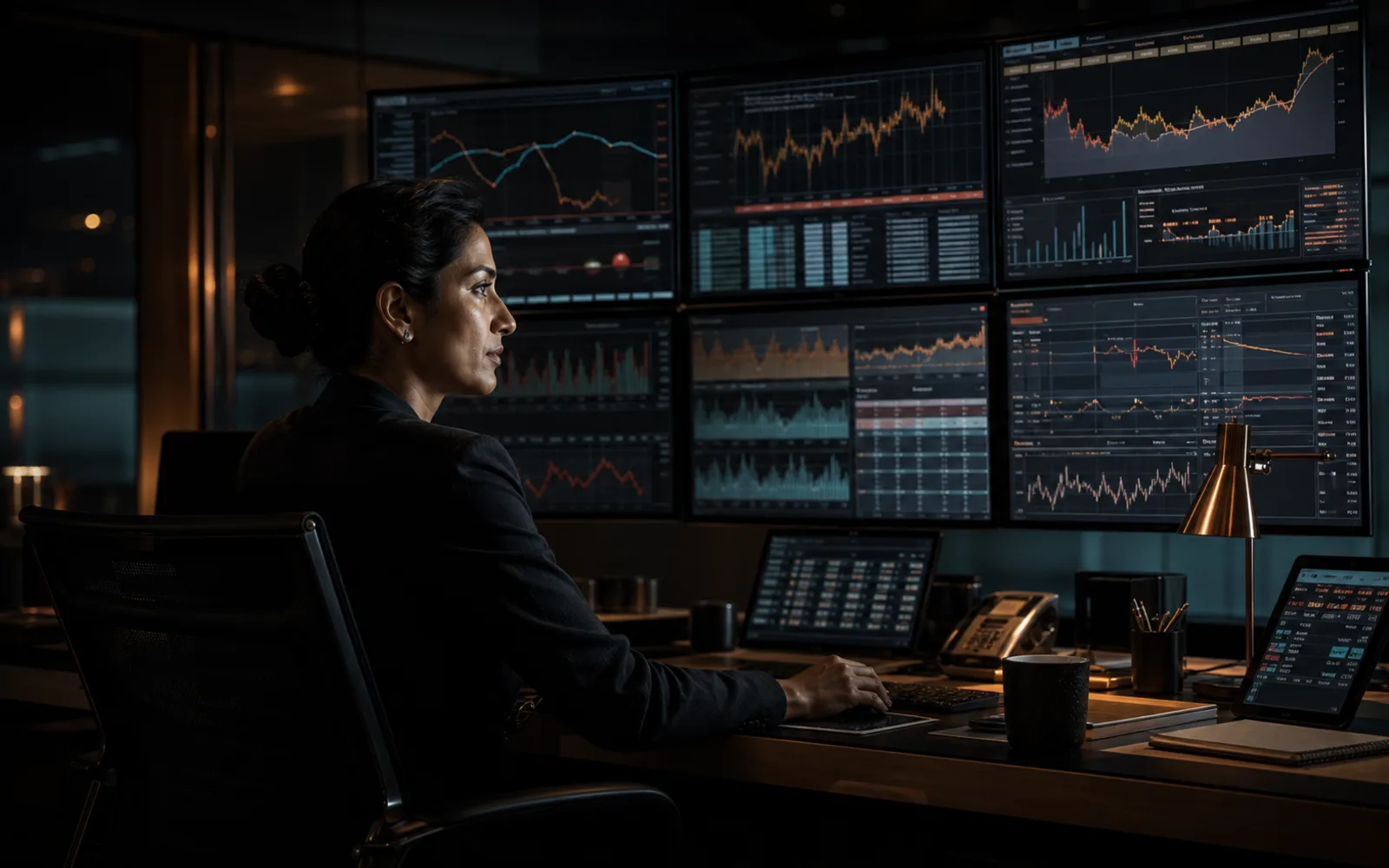
AI can improve how trading teams research markets, prioritize signals and monitor execution. It does not remove the need for a trading control framework. The strongest operating models separate what a model may recommend from what a person or a guarded system may execute.
Start with signal quality, not model novelty
Define the decision before selecting the model. Document the source data, prediction horizon, acceptable error range and action that follows a signal. Compare a new model with a simple baseline and detect when complexity does not improve outcomes.
Build controls around the execution boundary
Production controls should cover position limits, concentration, liquidity, price bands, order throttling and kill-switch behaviour. Every automated recommendation needs an audit trail recording the model version, input snapshot, confidence, decision and execution outcome.
Monitor drift and business impact
Combine statistical drift with trading outcomes. Track calibration, false positives, slippage, drawdown contribution and manual overrides. A model is not healthy simply because its offline accuracy is stable; it must remain useful under live market conditions.
A governed pattern
Use AI for ranking and scenario analysis, then route actions through deterministic policy checks. Escalate low-confidence or high-impact decisions to an accountable human owner.